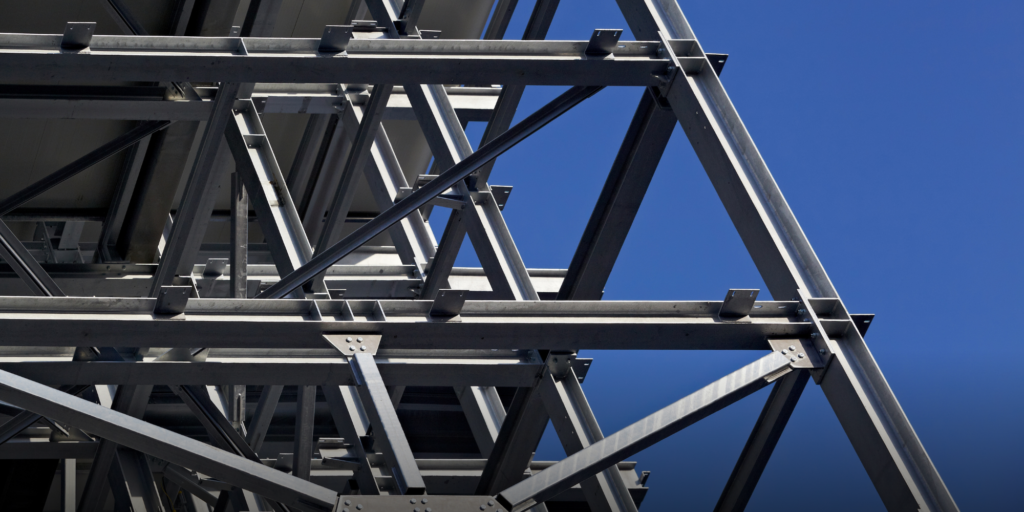

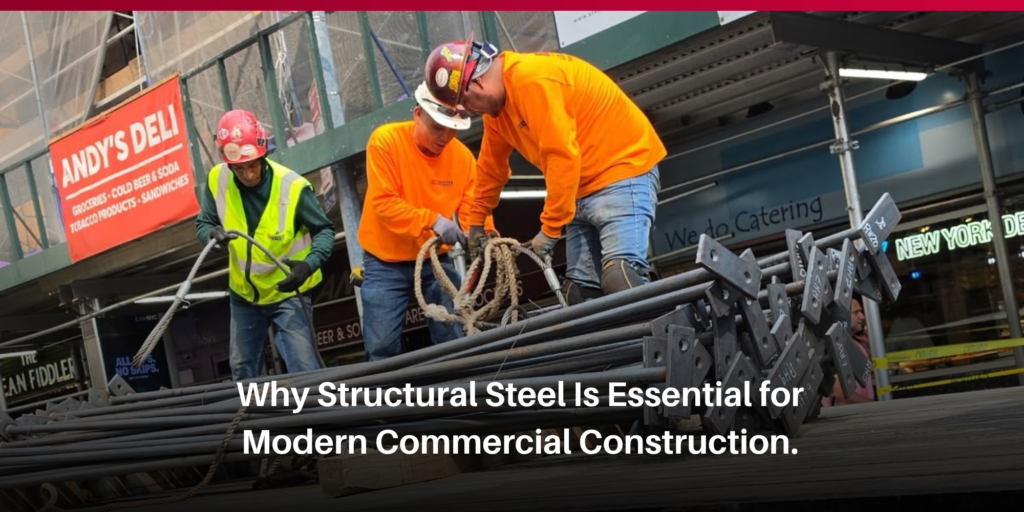
Structural steel has become a critical component of modern commercial construction, offering the strength, flexibility, precision, and construction efficiency needed for today’s demanding building projects. From high-rise developments and office buildings to retail spaces, warehouses, mixed-use developments, and complex urban projects, structural steel provides a dependable framework for building stronger and more adaptable structures.
As commercial construction continues to evolve, contractors, developers, architects, and engineers are looking for structural systems that can support ambitious designs while helping projects stay efficient and adaptable. Structural steel meets many of these requirements through its high strength-to-weight ratio, off-site fabrication capabilities, long-span performance, and potential for future modification.
For companies working on demanding commercial projects, choosing the right structural steel fabrication and erection partner is equally important. Precision fabrication and professional installation can have a direct impact on project quality, coordination, and schedule.
Why Is Structural Steel Important in Modern Commercial Construction?
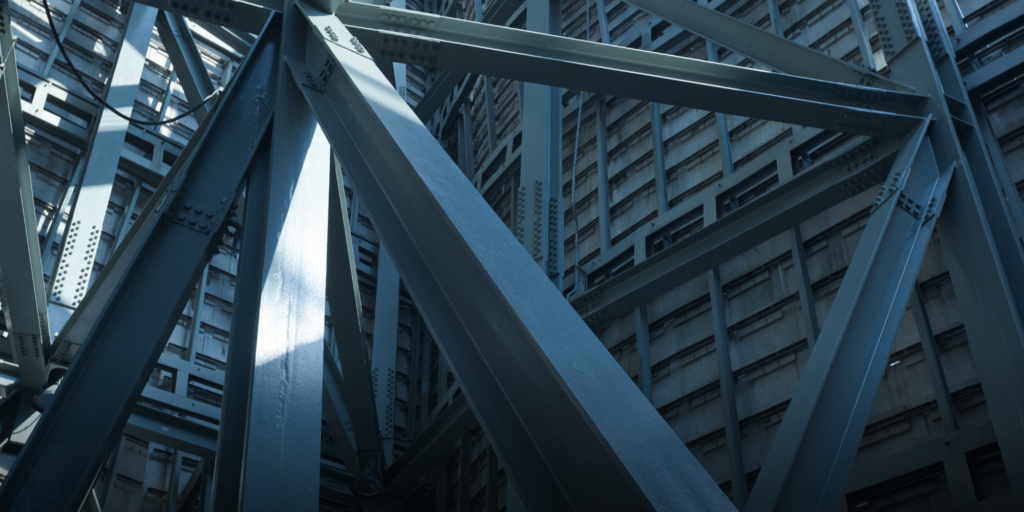
Structural steel forms the primary load-bearing framework of many commercial buildings. Beams, columns, braces, connections, and other steel components work together to transfer building loads safely through the structure and into the foundation.
But the importance of structural steel goes beyond simply supporting a building.
Modern commercial projects often require:
- Large open floor plans
- Long structural spans
- Faster construction schedules
- Complex architectural designs
- Future building modifications
- Precise fabrication
- Reliable structural performance
- Efficient use of construction materials
Structural steel can help address these requirements while giving project teams greater flexibility throughout the construction process.
1. High Strength for Demanding Commercial Structures
One of the primary reasons structural steel is widely used is its combination of strength and relatively low structural weight.
Steel can carry substantial loads while allowing engineers to design efficient structural systems. Its high strength-to-weight ratio can also help create longer spans and larger open areas without requiring excessive numbers of interior columns.
This is particularly valuable for commercial buildings where usable floor area matters.
For example, retail facilities, offices, restaurants, warehouses, and mixed-use developments can benefit from structural systems that provide greater flexibility in how interior spaces are arranged.
The result: a structural framework capable of supporting demanding commercial applications while giving architects and developers more freedom in space planning.
2. Faster Construction Through Off-Site Fabrication
Construction schedules are becoming increasingly important for commercial developers and general contractors.
One major advantage of structural steel is that many components can be fabricated off-site while other construction activities are taking place at the project location.
Steel members can be cut, drilled, welded, assembled, and prepared in controlled fabrication environments before being transported to the jobsite for erection.
This approach can reduce the amount of fabrication work required on-site and help crews focus on installation and erection.
According to the American Institute of Steel Construction (AISC), off-site fabrication can help streamline construction, while steel can be erected without waiting for concrete curing processes associated with conventional concrete framing.
Why this matters for contractors:
- Better jobsite coordination
- Reduced on-site fabrication
- More predictable installation
- Efficient material delivery
- Potentially shorter construction cycles
- Less disruption between trades
For commercial projects operating within tight schedules, these advantages can be significant.
3. Precision Fabrication Improves Project Quality
Modern commercial construction requires accuracy.
A small dimensional issue in a structural component can create problems during installation and potentially affect other trades working around the steel frame.
Structural steel fabrication takes place in controlled shop environments where components can be manufactured to specified dimensions and tolerances before reaching the construction site. AISC highlights controlled off-site fabrication as a major advantage for quality and predictable performance.
This means the steel arriving at a project site is prepared for its intended application rather than requiring extensive modification in the field.
Precision in fabrication leads to greater predictability during erection.
That is why experienced structural steel fabricators and erectors play an important role in commercial construction.
4. Structural Steel Creates Flexible Commercial Spaces
Modern commercial buildings increasingly require adaptable interior environments.
A business may change its layout. A retail space may be renovated. An office building may be converted into another use. A property may eventually require additional openings, modified loading requirements, or other structural changes.
Structural steel can support this type of adaptability.
Steel framing can provide long spans and open, column-free areas, giving architects and owners more flexibility when designing and modifying commercial spaces. AISC also identifies adaptability as a key advantage of structural steel for future building modifications and adaptive reuse.
This can be valuable for:
- Office buildings
- Retail developments
- Mixed-use properties
- Industrial facilities
- Warehouses
- Hospitality projects
- Multi-story commercial buildings
A structure designed with future flexibility in mind can potentially remain useful for longer as the needs of its occupants change.
5. Structural Steel Supports Complex Architectural Designs
Commercial architecture continues to become more ambitious.
Modern buildings can feature large open spaces, unusual geometries, long spans, cantilevered areas, and complex structural configurations.
Structural steel offers a broad range of shapes, sizes, profiles, and connection possibilities, making it suitable for many architectural and engineering requirements.
This gives architects and engineers greater freedom to create distinctive commercial environments without allowing the structural system to unnecessarily restrict the design.
Good structural engineering doesn’t just support the architecture—it helps make the architecture possible.
6. Steel Can Help Improve Construction Efficiency
Efficiency is not only about how quickly a building goes up.
It also involves:
- Material handling
- Labor requirements
- Jobsite coordination
- Installation sequencing
- Quality control
- Transportation
- Waste management
Because structural steel components can be fabricated away from the main construction area, project teams can coordinate fabrication and site preparation simultaneously. AISC notes that this off-site approach can reduce construction cycle time and on-site labor requirements.
For large commercial projects, improving efficiency at several stages can make a meaningful difference to overall project delivery.
7. Durability and Long-Term Performance
Commercial buildings are expected to perform for decades.
Structural steel provides high strength, durability, and predictable structural behavior when properly designed, fabricated, installed, maintained, and protected for the project’s environmental conditions.
Protective coatings and appropriate corrosion-control strategies can also help extend the service life of steel components in environments where corrosion is a concern.
This makes structural steel a strong option for projects where long-term structural performance is a priority.
8. Structural Steel Supports More Sustainable Construction
Sustainability is now an important consideration in commercial construction.
Structural steel has a significant advantage in terms of recyclability. AISC reports that structural steel contains an average of 92% recycled content in the U.S. and that steel is 100% recyclable at the end of its service life.
Steel components can also potentially be reused or recycled when buildings are renovated or deconstructed.
This supports a more circular approach to construction materials and can help project teams consider material reuse and end-of-life recovery as part of the building’s lifecycle.
9. Steel Is Well Suited to Urban Construction
Urban construction presents unique challenges.
Projects in cities such as New York City and Manhattan often have limited staging areas, high traffic volumes, neighboring buildings, pedestrian activity, and strict logistical requirements.
For these projects, careful planning of steel delivery, sequencing, lifting, and installation becomes extremely important.
Structural steel’s ability to be fabricated in advance and delivered for erection can help project teams coordinate construction within constrained urban environments.
A professional steel erection team must understand not only the steel itself but also the realities of working on active commercial jobsites.
10. Professional Steel Erection Is Just as Important as Fabrication
Quality fabrication is only one part of a successful structural steel project.
Once fabricated steel reaches the jobsite, experienced crews must coordinate:
Delivery → Staging → Rigging → Hoisting → Positioning → Connection → Alignment → Inspection
Every stage requires careful planning and execution.
AISC describes structural steel erection as an important stage of the overall manufacturing, fabrication, and erection process, with safe and economical field assembly being essential to successful project delivery.
For commercial contractors, working with a company capable of supporting both fabrication and professional erection can simplify coordination and help maintain consistency from the shop to the jobsite.
What Should Contractors Look for in a Structural Steel Company?
Selecting a structural steel partner is an important decision for any commercial construction project.
Before choosing a steel contractor or fabricator, consider:
1. Experience
Look for experience with commercial and complex structural steel projects.
2. Fabrication Capabilities
The company should have the ability to produce steel components accurately according to project requirements.
3. Installation Expertise
Fabrication is only part of the job. Experienced erection crews are essential for efficient field installation.
4. Safety Focus
Structural steel erection involves cranes, rigging, elevated work, heavy components, and active construction environments. Safety planning should be a core part of the operation.
5. Project Coordination
Successful steel projects require communication between fabricators, engineers, general contractors, erectors, and other trades.
6. Quality Control
Consistent fabrication, dimensional accuracy, inspection, and proper documentation help reduce avoidable issues during installation.
The Future of Commercial Construction Is Built on Precision
As commercial buildings become more complex and construction schedules become increasingly demanding, structural systems need to provide more than basic load-bearing capacity.
They need to support speed, flexibility, precision, durability, efficiency, and long-term value.
Structural steel brings many of these characteristics together.
From fabrication in controlled shop environments to precision erection on busy urban jobsites, steel allows construction teams to create strong structural frameworks while supporting modern architectural and commercial requirements.
For contractors, developers, and project owners, the right steel partner can make a significant difference.
Pro Steel Services: Structural Steel Built for Commercial Construction
At Pro Steel Services, we understand that structural steel is more than beams and columns.
It is the framework that supports the next stage of construction.
Our team provides professional structural steel fabrication and erection services for commercial construction projects, with a focus on precision, coordination, quality workmanship, and dependable field execution.
From fabrication through installation, we help construction teams move their projects forward with structural steel solutions built for demanding environments.
Planning a commercial construction project that requires structural steel?
Contact Pro Steel Services to discuss your fabrication and erection requirements.
📞 917-254-6604 | 347-294-0780
https://prosteelservices.com/
Frequently Asked Questions
What is structural steel used for in commercial construction?
Structural steel is used to create the primary framework of many commercial buildings, including beams, columns, braces, and other load-bearing components.
Why is structural steel popular for commercial buildings?
Structural steel offers high strength, long-span capabilities, design flexibility, off-site fabrication, durability, and recyclability, making it suitable for many commercial construction applications.
Does structural steel help speed up construction?
It can. Steel components can be fabricated off-site while other work occurs on-site, then delivered and erected as part of a coordinated construction sequence.
Is structural steel environmentally friendly?
Structural steel has strong recyclability characteristics. AISC reports that U.S. structural steel contains an average of 92% recycled content and is 100% recyclable.
Why is professional steel erection important?
Accurate erection is essential to properly assemble the fabricated structural components and ensure the steel frame is installed according to the project’s engineering and construction requirements.