

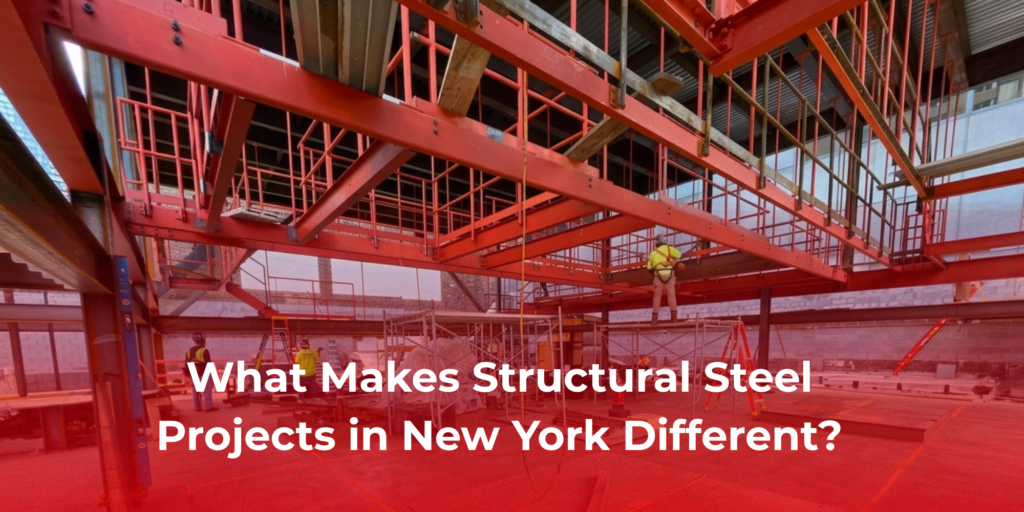
New York is one of the most demanding construction environments in the United States. From high-density commercial developments in Manhattan to industrial and institutional projects across the five boroughs, Long Island, Westchester and New Jersey, structural steel projects require more than quality materials and skilled fabrication.
They require precise planning, detailed coordination, efficient logistics and experienced structural steel erection teams.
For general contractors, developers, architects and engineers, understanding the challenges of structural steel construction in New York can help improve project planning, reduce delays and create a smoother path from engineering and fabrication to final erection.
Why Are Structural Steel Projects in New York Different?
The fundamentals of structural steel construction remain consistent, but the conditions surrounding a project can vary significantly.
New York construction sites often operate within dense urban environments where space, access, transportation, scheduling, permitting and coordination can directly affect how steel is delivered and erected.
New York City also has specific construction requirements and inspection processes. For structural steel work, NYC requirements can include special inspections covering areas such as structural steel details, welding and high-strength bolting.
That makes early coordination particularly important.
1. Limited Jobsite Space Requires Better Planning
One of the biggest challenges of structural steel construction in New York City is the limited amount of space available around many jobsites.
A project may be surrounded by existing buildings, active streets, sidewalks, utilities and other construction activities. There may be little room to store large quantities of fabricated steel on-site.
As a result, structural steel delivery and erection often need to be carefully sequenced.
Rather than sending every steel member to the jobsite at once, fabrication and delivery can be coordinated around the erection sequence and available site space. The American Institute of Steel Construction notes that fabricators can deliver members according to the erection sequence to accommodate available space at the jobsite.
For New York projects, this type of coordination can make a significant difference.
2. Urban Logistics Can Affect Steel Delivery
Moving structural steel through a dense metropolitan environment is different from delivering materials to a large suburban construction site.
Delivery routes, site access, street conditions, traffic, staging areas and permitted construction activities all have to be considered.
NYC Department of Transportation requirements cover construction-related activities taking place in or affecting streets and sidewalks, including the placement of construction materials, cranes, boom trucks and other equipment.
This means structural steel contractors need to think beyond fabrication.
The question is not simply:
“Is the steel ready?”
It is also:
“Can the steel arrive at the right location, at the right time, and be safely moved into position?”
3. Erection Sequencing Is Critical
Structural steel erection is a highly coordinated process.
Steel members need to arrive in an order that supports the planned erection sequence. Cranes and lifting equipment need to be positioned appropriately, while crews must coordinate connections, bolting, welding and structural alignment.
AISC guidance emphasizes the importance of pre-construction sequencing and coordination between the erector, fabricator and controlling contractor.
On a New York construction site, poor sequencing can create additional logistical problems because there may be limited space to reorganize materials or equipment.
Effective sequencing therefore begins well before the first beam reaches the jobsite.
4. Coordination Between Teams Matters
Structural steel projects involve multiple parties:
- Architects
- Structural engineers
- General contractors
- Steel detailers
- Fabricators
- Erectors
- Inspectors
- Other specialty contractors
- Project managers
A change in one part of the project can affect several other activities.
For example, a change to a connection, beam location or opening may affect fabrication, delivery and erection.
Early communication between the project team and structural steel contractor helps identify potential conflicts before they become expensive field problems.
AISC’s guidance for general contractors specifically emphasizes coordination and management of the steel scope from early design coordination through fabrication, delivery and erection.
5. NYC Construction Requirements Add Another Layer of Coordination
New York City has its own construction codes and requirements.
As of 2026, NYC’s existing-building work continues to operate under the 2022 NYC Construction Codes until the new Existing Building Code takes effect for applicable alteration applications on July 17, 2027.
For structural steel projects, requirements can include inspections related to welding, high-strength bolting and structural steel details.
Construction activity can also be affected by local requirements relating to noise, street use and construction operations. For example, NYC requires construction noise mitigation planning, and specific rules apply to construction activity outside standard weekday hours.
Understanding these requirements early can help project teams coordinate the structural steel scope more effectively.
6. Existing Buildings Can Create Additional Challenges
Not every structural steel project in New York involves a completely new building.
Renovations, additions, expansions and adaptive-reuse projects may require structural steel to be integrated with an existing structure.
This can introduce additional considerations, including:
- Existing structural conditions
- Limited access
- Existing columns and beams
- Temporary support requirements
- Connection modifications
- Field verification
- Coordination with occupied spaces
- Integration with existing building systems
NYC’s upcoming Existing Building Code is specifically designed to govern alteration and maintenance work beginning July 17, 2027, making awareness of evolving requirements increasingly important for project teams working on existing buildings.
7. Precision Matters From Fabrication to Erection
The quality of a structural steel project is not determined only by the steel itself.
Precision throughout detailing, fabrication and erection is essential.
Fabrication involves processes such as cutting, drilling, fit-up and welding before completed members are prepared for delivery. At the jobsite, steel must then be positioned, connected and aligned according to the approved erection documents.
AISC also identifies established tolerance requirements covering structural steel fabrication and erection.
For complex New York projects, maintaining accuracy throughout the process helps support efficient field installation and coordination with other trades.
8. Experience With Complex Sites Matters
Every construction project has its own requirements, but New York’s dense construction environment can amplify small coordination issues.
A structural steel contractor working in this market needs to understand how engineering, fabrication, transportation, site logistics, erection and project scheduling connect together.
That is why choosing a contractor with experience across the complete structural steel workflow can be valuable.
The goal is not simply to fabricate steel.
It is to help move the project from design and planning to fabrication, delivery and erection with the right coordination at every stage.
Structural Steel Construction Across New York and New Jersey
Pro Steel Services provides structural steel solutions for commercial and complex construction projects, supporting clients through engineering, fabrication, project management and structural steel erection.
With experience serving projects across New York City, Manhattan, Brooklyn, Queens, the Bronx, Staten Island, Long Island, Westchester and New Jersey, Pro Steel Services understands the importance of coordinating structural steel work with the realities of the local construction environment.
From structural steel fabrication to field erection, every project requires a combination of technical knowledge, planning, communication and execution.
Final Thoughts
Structural steel projects in New York are different because the steel itself is only one part of the challenge.
Site constraints, urban logistics, erection sequencing, inspections, construction requirements, coordination and precision all play an important role.
For developers, general contractors, architects and engineers, bringing the structural steel team into the planning process early can help create better coordination between design, fabrication, delivery and erection.
In a construction environment as complex as New York, successful structural steel projects depend on more than materials. They depend on planning, precision, experience and execution.
Looking for a Structural Steel Contractor in New York?
Pro Steel Services supports structural steel projects across NYC, Brooklyn, Queens, Manhattan, the Bronx, Staten Island, Long Island, Westchester and New Jersey.
Whether your project requires structural steel fabrication, engineering coordination, project management or steel erection, our team can help you plan and execute the structural steel scope with precision.
Contact Pro Steel Services to discuss your next structural steel project.