

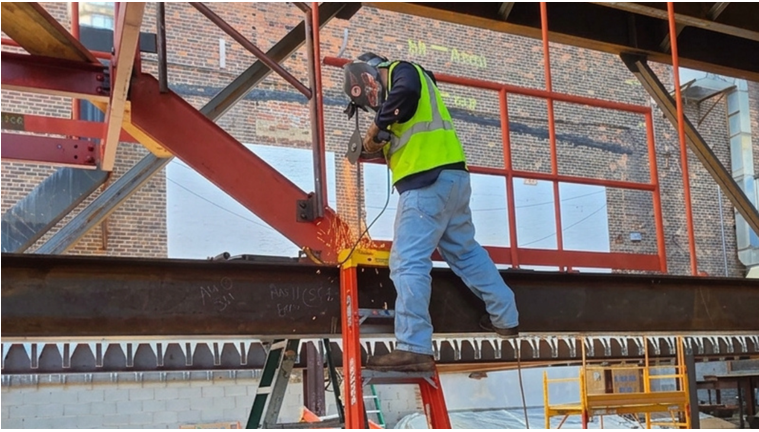
Discover how structural steel supports long-term building performance through strength, durability, design flexibility, precision fabrication, and professional installation.
A commercial building is designed to serve its owners and occupants for many years. While architectural finishes and interior systems can change over time, the structural framework must continue performing reliably throughout the building’s service life.
This is one reason structural steel remains an important material in modern commercial construction.
From office buildings and warehouses to industrial facilities, retail developments, healthcare buildings, and mixed-use projects, structural steel provides the strength and flexibility needed to support demanding building requirements.
But long-term performance depends on more than simply choosing steel. Engineering, material selection, precision fabrication, quality control, proper erection, protective systems, and ongoing maintenance all contribute to how a steel structure performs over time.
For contractors, developers, engineers, and building owners, understanding these factors can help support better construction decisions from the beginning of a project.
Why Is Structural Steel Important for Long-Term Building Performance?
Structural steel is widely used because it combines high strength, durability, dimensional consistency, design flexibility, and efficient construction.
A properly designed and constructed steel frame can support significant loads while allowing architects and engineers to create large open spaces, long spans, and adaptable commercial environments.
Its performance also depends on proper design and detailing for the specific building location and environmental conditions.
For example, a commercial building in New York City may face different environmental and logistical considerations than a structure in another region. Structural steel projects therefore require careful engineering and professional execution from the fabrication shop to the jobsite.
1. High Strength Supports Structural Performance
One of the primary advantages of structural steel is its high strength-to-weight ratio.
Steel structural members can carry substantial loads without requiring excessively heavy structural systems. This makes steel particularly useful for commercial buildings where structural performance, usable floor space, and architectural flexibility are important.
Structural steel can be used for:
- Beams
- Columns
- Bracing systems
- Trusses
- Joists
- Connections
- Structural frames
When these components are properly engineered and installed, they work together as an integrated structural system designed to transfer building loads safely.
The long-term benefit
A strong structural framework provides a reliable foundation for the rest of the building, supporting floors, walls, roofing systems, equipment, occupants, and other building loads throughout its service life.
2. Steel Provides Long-Term Durability
Commercial buildings are exposed to changing environmental conditions throughout their lives.
Depending on location and application, structural steel may encounter:
- Moisture
- Humidity
- Temperature changes
- Wind
- Snow
- Industrial environments
- Coastal conditions
- Chemical exposure
Properly designed and protected steel can provide long-term durability in these environments.
Corrosion protection is particularly important. Depending on the project, engineers and contractors may specify appropriate coatings, paint systems, galvanizing, detailing, drainage, or other corrosion-control measures.
Good structural steel performance begins with designing and protecting the steel for its actual environment.
3. Precision Fabrication Reduces Installation Problems
Long-term building performance begins before the steel reaches the construction site.
During fabrication, structural steel components are cut, drilled, welded, assembled, and prepared according to project drawings and specifications.
Accurate fabrication helps ensure that:
- Connections align correctly
- Members fit as designed
- Installation proceeds efficiently
- Field modifications are minimized
- Structural components meet project requirements
Precision is especially important on complex commercial projects where structural steel must coordinate with concrete, mechanical systems, electrical systems, architectural elements, and other trades.
A well-fabricated steel package creates a more predictable installation process.
4. Professional Steel Erection Protects Structural Integrity
Even high-quality fabricated steel requires professional installation.
During erection, beams, columns, braces, and connections must be positioned and secured according to the project’s engineering requirements.
Professional steel erection involves careful coordination of:
Delivery → Staging → Rigging → Hoisting → Positioning → Alignment → Connections → Final Inspection
Each stage matters.
Incorrect positioning, poor connection execution, or inadequate temporary stability can create problems during construction and potentially affect the completed structure.
Experienced steel erection crews understand the importance of accurate installation, safe lifting procedures, jobsite coordination, and communication with the wider construction team.
5. Structural Steel Supports Flexible Building Design
Commercial properties often need to adapt to changing business requirements.
A building may eventually undergo:
- Interior renovations
- Tenant changes
- Layout modifications
- Expansion
- Adaptive reuse
- New equipment installation
Structural steel can support flexible building layouts through long spans and efficient framing systems.
For commercial developers and property owners, this adaptability can contribute to the long-term usefulness of a building.
Instead of designing only for today’s requirements, structural systems can be considered with potential future needs in mind.
6. Steel Can Support Longer Building Life Cycles
The structural frame is one of the most important long-term assets of a commercial building.
While finishes, fixtures, technology, and interior spaces may be updated multiple times, the structural system can remain in service for decades when properly designed, constructed, protected, and maintained.
This makes structural steel particularly valuable for buildings intended for long-term ownership.
Long-term value can come from:
- Structural durability
- Adaptability
- Repairability
- Design flexibility
- Recyclability
- Consistent structural performance
For developers and building owners, these characteristics can help protect the long-term value and usability of a commercial property.
7. Steel Supports Modern Commercial Architecture
Today’s commercial buildings increasingly demand larger spaces, open floor plans, distinctive architectural features, and flexible layouts.
Structural steel can accommodate many of these requirements.
Long-span steel systems can reduce the need for interior columns, creating more usable floor space for:
- Offices
- Retail
- Warehousing
- Manufacturing
- Hospitality
- Healthcare
- Entertainment
- Mixed-use developments
This combination of structural strength and architectural flexibility makes steel an important part of modern commercial building design.
8. Sustainability and the Steel Building Lifecycle
Long-term building performance is not only about structural strength.
Sustainability and material lifecycle considerations are becoming increasingly important to developers and construction teams.
Steel is highly recyclable, and structural steel can contribute to more circular approaches to construction when materials are recovered, reused, or recycled at the end of a building’s life.
This gives steel an important role in conversations about sustainable commercial construction.
For project teams pursuing sustainability objectives, material selection should be considered alongside energy performance, building systems, site conditions, and the overall project lifecycle.
9. Why Quality Control Matters
A structure’s long-term performance depends heavily on the quality of work completed during construction.
Quality control should be considered throughout the entire structural steel process.
Fabrication
Steel components should be produced according to approved drawings, specifications, and applicable requirements.
Welding
Welding procedures and qualified personnel are important to achieving reliable structural connections.
Installation
Members must be properly positioned, aligned, and connected according to project requirements.
Inspection
Appropriate inspections help identify potential issues before they become larger construction problems.
Quality at every stage helps create confidence in the finished structure.
10. Why Experience Matters in Structural Steel Construction
Structural steel construction involves more than manufacturing metal components.
Successful projects require coordination between:
- Structural engineers
- Architects
- General contractors
- Steel fabricators
- Steel erectors
- Crane operators
- Inspectors
- Project managers
- Other construction trades
An experienced structural steel company understands how these different parts of the process work together.
This experience becomes especially valuable on complex commercial projects, tight urban jobsites, and projects where schedule coordination is critical.
Structural Steel in New York City Commercial Construction
New York City presents unique challenges for commercial construction.
Limited staging areas, dense development, traffic, neighboring structures, active businesses, and demanding construction schedules can make structural steel installation particularly complex.
Professional planning becomes essential.
Steel deliveries, crane operations, material staging, installation sequencing, and communication with other trades must be coordinated carefully.
For commercial projects in New York City and the surrounding region, working with an experienced structural steel contractor can help construction teams manage these challenges more effectively.
Pro Steel Services: Building for Long-Term Performance
At Pro Steel Services, we understand that structural steel is the backbone of many commercial construction projects.
Our team provides professional structural steel fabrication, welding, steel erection, and installation services, with a focus on precision, safety, quality, and reliable project execution.
Our experienced professionals work to ensure that every stage—from fabrication through installation—is handled with attention to detail.
Our capabilities include:
- Structural Steel Fabrication
- Commercial Steel Installation
- Structural Steel Erection
- Precision Welding
- Steel Beam & Column Installation
- Commercial & Industrial Steel Solutions
- Project Coordination
- Quality-Focused Workmanship
With more than 60 years of combined industry experience, our team brings practical knowledge and expertise to demanding structural steel projects.
The Future of Commercial Buildings Is Built to Perform
Long-term building performance starts with decisions made during the earliest stages of design and construction.
Structural steel provides a combination of strength, durability, flexibility, precision, and recyclability that makes it an important material for modern commercial construction.
But the material is only part of the equation.
Quality engineering + precision fabrication + professional erection + proper protection + ongoing maintenance = long-term structural performance.
For contractors, developers, and building owners, choosing experienced structural steel professionals can help ensure that the building’s most important framework is built to perform for years to come.
Frequently Asked Questions
How long can a structural steel building last?
The service life of a steel structure depends on its design, materials, environmental exposure, corrosion protection, construction quality, and maintenance. Properly designed and maintained steel structures can provide decades of service.
Is structural steel durable for commercial buildings?
Yes. Structural steel is widely used in commercial buildings because of its high strength, predictable performance, durability, and ability to support demanding structural requirements.
How does steel fabrication affect building performance?
Precision fabrication helps ensure that structural components are manufactured according to project specifications, improving fit, connection accuracy, and installation efficiency.
Does structural steel require maintenance?
Yes. Like any structural material, steel should be inspected and maintained appropriately. Maintenance requirements depend on the building’s environment, protective systems, and project specifications.
Why is professional steel erection important?
Proper steel erection ensures that fabricated components are safely positioned, aligned, and connected according to engineering and construction requirements.
Build Stronger. Build for the Future.
Your structural frame is the backbone of your commercial building.
Pro Steel Services provides experienced structural steel fabrication and erection solutions for commercial construction projects across New York and surrounding markets.
Whether you’re planning a new commercial development, industrial facility, warehouse, or major structural project, our experienced team is ready to help.
Contact Pro Steel Services today to discuss your next structural steel project.
📞 917-254-6604 | 347-294-0780 🌐 prosteelservices.com